
Speakinfinite

CELPIP Speaking Prediction Sep 4-6

CELPIP Speaking Prediction Sep 4-6
Blog, CELPIP

CELPIP Speaking Prediction Sep 4-6 -Part 2

CELPIP Speaking Prediction Sep 4-6 | Speak Infinite CELPIP SPEAKING PREDICTION Sep 4-6 Speaking Prediction: all 8 tasks in one place Work through the exact task types CELPIP tests, with a response structure and a sample answer for each one, plus trainer-style tips to sharpen your delivery before test day. Start Practicing Talk to a Trainer Task 1 · Advice Task 2 · Experience Task 3 · Describe Task 4 · Predict Task 5 · Persuade Task 6 · Difficult Task 7 · Opinion Task 8 · Unusual Practice all 8 Speaking tasks Try each question out loud first. Then check the response structure and sample answer to see how a strong response is organized. 1 Giving Advice A tough call between two cities Practice Question Your friend has been offered a job in another city with a higher salary, but it means leaving behind family and friends. Give your friend advice on whether they should take the job. Response Structure Acknowledge the situation → State your recommendation → Reason 1 → Reason 2 → Example → Acknowledge the trade-off → Close with your advice Sample Response I’d tell my friend that a higher salary alone isn’t a strong enough reason to move. It’s worth weighing what the extra income actually buys against what gets left behind, since being far from family can be harder than it sounds once the excitement of a new job fades. That said, if the new city genuinely opens doors, better growth, a stronger industry network, it might be worth it as long as there’s a plan to stay connected with family, regular visits, calls, maybe even helping them relocate later. In the end, I’d encourage my friend to picture life a year from now under each option before deciding, not just the first few months. Trainer Tip: Don’t just pick a side, show you understand what the person is giving up either way. That balance is what examiners reward. 2 Personal Experience Helping someone in need Practice Question Talk about a time when you helped someone in need. Maybe you helped a stranger, a friend, or a family member. What did you do, why did you help, and how did it make you feel? Response Structure Set the scene → What happened → Why you stepped in → What you actually did → How it turned out → How it made you feel Sample Response A few months ago, an elderly neighbor was struggling to carry groceries up three flights of stairs after her elevator broke down. I happened to be walking in right behind her, so I offered to carry the heavier bags up for her. It wasn’t a big gesture, but she was clearly relieved, and we ended up talking for a few minutes on her doorstep. What stuck with me afterward wasn’t the task itself, it was realizing how often small moments like that get overlooked simply because nobody happens to be around at the right time. It left me a bit more attentive to those situations since then. Trainer Tip: Small, specific stories score better than vague, general ones. One real moment beats three generic examples. 3 Describe the Picture Paint the scene with words Practice Question Describe the picture below to someone who cannot see it. Response Structure Overall setting → Foreground → Centre → Right side → Background details → Overall impression Sample Response The picture shows a busy indoor gym. In the foreground, a man in a green tank top is lifting a dumbbell in front of a large mirror, with a rack of weights beside him. In the centre, a woman in workout gear is running on a treadmill, and a television mounted nearby is playing what looks like a news broadcast. On the right side, an older man holding a clipboard appears to be observing, possibly a trainer checking in on members. Toward the back, there are more machines and mats lined up along the wall. Overall, the gym feels active and well used, with people at different stages of their workout. Trainer Tip: Move through the picture in one consistent direction, front to back or left to right, so your description doesn’t feel scattered. 4 Make Predictions What happens next Practice Question Look at the same gym picture again and predict what might happen next. Response Structure Evidence from the picture → Immediate prediction → Second prediction → Likely outcome Sample Response Judging by the picture, the woman on the treadmill looks like she’s partway through a steady run, so she’ll probably keep going for another stretch before slowing down to cool off. The man lifting weights seems focused on his set, so he’ll likely finish his reps and move on to a different machine next. Since the man with the clipboard appears to be observing rather than working out himself, there’s a good chance he’s about to approach one of them, maybe to offer guidance or check on their form. Overall, the gym will probably stay just as active for a while yet. Trainer Tip: Every prediction should trace back to something visible in the image. Avoid guesses that the picture doesn’t support. 5 Comparing & Persuading Two smartwatches, one winner Practice Question You and your friend are both looking to buy a new smartwatch. You’ve each picked a different option. Compare the two and convince your friend that your choice is the better buy. Response Structure Option A → Option B → Compare on shared criteria → Your recommendation → Address the counterpoint → Final persuasion Sample Response I picked the fitness-focused smartwatch at around $150, mainly because it tracks heart rate and sleep well and lasts close to a week on a single charge. Your pick, the premium model at $350, definitely looks sleeker and handles calls and apps more smoothly, but the battery only lasts a day or two, which means charging it constantly. If what matters most to you is daily reliability and not overspending on features you

CELPIP Speaking Prediction Sep 4-6
Blog, CELPIP

CELPIP Speaking Prediction Sep 4-6

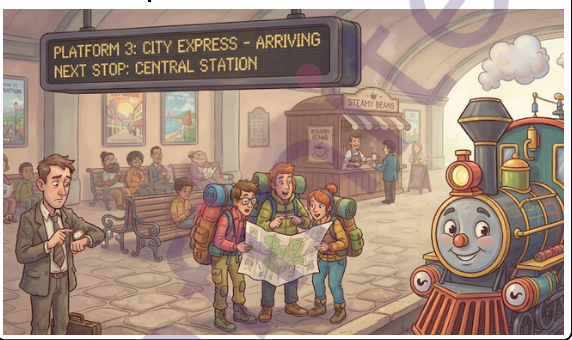
  SpeakInfinite CELPIP SPEAKING PREDICTION CELPIP Speaking Prediction Sep 4-6 Practice all 8 CELPIP Speaking tasks with the latest Sep 4-6 prediction topics, response structures, useful phrases and trainer-style guidance. View Speaking Tasks Explore Speak Infinite CELPIP Speaking Prediction Sep 4-6 Welcome to Speak Infinite’s CELPIP Speaking Prediction for September 4-6. This practice set covers all eight Speaking tasks shown in the latest prediction post, with clear prompts and practical response structures. The goal is not simply to speak for the required time. You should focus on organizing your ideas, developing your response, using appropriate vocabulary, speaking naturally and maintaining fluency throughout your answer. How to use this practice test: Try answering each question without looking at the sample response. Record yourself, listen to your answer, identify pauses or repeated words, and then compare your structure with the guidance provided below. Jump to a Speaking Task Task 1 – Giving Advice Task 2 – Personal Experience Task 3 – Describe a Picture Task 4 – Make Predictions Task 5 – Compare & Persuade Task 6 – Difficult Situation Task 7 – Express an Opinion Task 8 – Unusual Situation TASK 1 Giving Advice Practice Question: Your neighbor is deciding between renting an apartment downtown or in the suburbs. Give her advice on where to live. Response Structure: Acknowledge the situation → Give your recommendation → Reason 1 → Reason 2 → Example → Alternative → Conclusion Sample Response If I were in your position, I would recommend renting an apartment downtown because it would be more convenient for your daily life. Living downtown usually gives you easier access to public transportation, shops, restaurants and other services. Another advantage is that you may spend less time commuting to work or school. You would also have more opportunities to meet people and enjoy activities close to home. For example, you could walk to a café or community event instead of driving a long distance. Of course, the suburbs may be quieter and more affordable, so if your priority is having more space and a peaceful environment, that could be a better option. However, if convenience and accessibility are important to you, I would choose downtown. Speaking Tip: Give at least two practical reasons and explain why your recommendation suits the person in the situation. TASK 2 Personal Experience Practice Question: Talk about a time when you had to adapt to a significant change in your life. Maybe you moved to a new country, changed schools, or started a new job. How did you cope? Response Structure: When → Situation → Challenge → Action → Result → Feeling → Lesson Sample Response One significant change I experienced was starting a new job in a different city. At first, I felt nervous because I had to learn new responsibilities and work with people I had never met before. To cope with the change, I created a simple routine and tried to stay organized. I also asked my coworkers questions whenever I was unsure about something and made an effort to communicate with them during breaks. After a few weeks, I became much more comfortable and confident. The experience taught me that major changes can be difficult at first, but being patient, organized and open to learning can make the transition much easier. Speaking Tip: Tell a clear story with a beginning, challenge, actions you took and a final result. TASK 3 Describe the Picture Practice Question: Describe the picture to someone who cannot see it. Picture Description Structure: Overall setting → Foreground → Centre → Background → Left side → Right side → People’s actions → Overall impression Sample Response Framework The picture shows a busy train station where several people are waiting for or preparing to board a train. In the foreground, there is a man checking the time, while in the centre a group of travelers is looking at a map. On the right side, I can see a colorful train arriving at the station. In the background, there are benches, passengers, a café and a large electronic sign showing that the City Express is arriving on Platform 3. Overall, the scene looks busy but organized, and the travelers appear to be preparing for their journey. Speaking Tip: Move logically from the overall setting to the foreground, centre and background. Use location words such as “on the left,” “in the centre” and “towards the back.” TASK 4 Making Predictions Practice Question: Look at the same picture in Task 3 again and predict what might happen next. Response Structure: Evidence from picture → Immediate prediction → Second prediction → Possible consequence Sample Response Judging by the picture, I think the City Express will arrive at Platform 3 very soon. The travelers who are looking at the map will probably check the platform information and prepare their belongings. Once the train arrives, some passengers may board while others may leave the station. The man checking his watch is also likely to move toward the platform because he appears to be waiting for the train. Since the station is quite busy, I think more people may gather around the platform before the train departs. Overall, the next few minutes will probably be quite active. Speaking Tip: Base every prediction on something visible in the picture. Use phrases such as “I think,” “it is likely that” and “there is a good chance that.” TASK 5 Comparing and Persuading Practice Question: You and your friend are both looking to buy a new smartwatch. You’ve each picked a different option. Compare the two and convince your friend that your choice is the better buy. Response Structure: Option A → Option B → Compare using criteria → Recommendation → Counterargument → Final persuasion Sample Response I would choose the fitness-focused smartwatch priced at $150 because I think it offers better value for everyday use. It tracks important features such as heart rate, sleep and workouts, and it also provides up to seven days of battery life. The premium

Scroll to Top